Can Invisalign Affect Speech? What to Expect

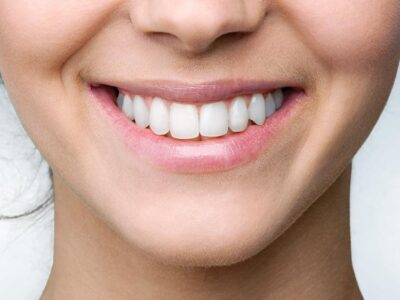
If you are considering Invisalign, one of the most common worries is not pain, cost, or even whether people will notice the trays. It is speech. More specifically, it is the fear of sounding different at work, on calls, in meetings, on dates, or while simply ordering coffee.
That concern is reasonable. Anything that sits over the teeth changes the way the tongue meets the surfaces inside the mouth, and speech depends on very small, very precise movements. The good news is that when Invisalign affects speech, the change is usually temporary and mild. Most people notice a slight lisp or a feeling that certain words are less crisp during the first few days. Then the mouth adapts.
The better answer, though, is more nuanced than “yes, but only for a little while.” Speech changes depend on the shape of your teeth, the way you form certain sounds, whether you have attachments, how consistently you wear your trays, and how sensitive you are to changes in oral sensation. Some patients barely notice a difference. Others hear it immediately, especially on “s,” “sh,” “z,” “th,” and sometimes “t” sounds.
Understanding why this happens, how long it typically lasts, and what you can do about it makes the adjustment much less stressful.
Why speech can change with clear aligners
Speech is a mechanical act. Air moves through the mouth, and the lips, tongue, teeth, and palate shape that air into recognizable sounds. Invisalign trays are thin, but they still add a layer of material over the teeth. That tiny change can be enough to alter the tongue’s contact points.
The sounds most likely to shift are sibilants, especially “s” and “z.” Those sounds require controlled airflow and precise tongue placement near the teeth. With aligners in place, the tongue may initially hit a slightly different surface or create a slightly different channel for the air. The result can be a faint whistle, a soft lisp, or speech that feels less sharp than usual.
“Th” can also feel awkward at first because the tongue usually moves close to or between the teeth for that sound. When the tooth surfaces are covered by plastic, the tongue has to relearn the position. “Sh” and “ch” can be affected too, though less often.
This is not unique to Invisalign. Retainers, whitening trays, mouthguards, and dentures can all influence speech during the adjustment phase. Invisalign simply gets more attention because patients wear it most of the day, and because adults in professional settings are often highly aware of even slight changes in how they sound.
What the speech change usually sounds like
Most people do not develop a dramatic lisp. It is typically subtle. You might hear a slight softness on “s” words, a brief slur on quick phrases, or a sensation that you are overpronouncing. Often, you feel the difference more than others hear it.
That distinction matters. Patients frequently report, “I sound strange,” when what they really mean is, “I can feel the trays every time I speak.” The mouth is full of sensory feedback. When a new appliance is present, your attention goes straight to it. Because you are focusing on the trays, your speech can feel amplified and awkward even when listeners barely notice anything.
In practice, many people get one of three experiences. First, there are patients who notice no meaningful change at all. Second, there are patients who hear a mild lisp for a few days and then adapt quickly. Third, there are patients who have an on and off adjustment period, especially in the early weeks when switching to each new tray still feels unfamiliar. That third group often includes people whose jobs involve a lot of speaking, such as teachers, lawyers, sales professionals, receptionists, and therapists. They are not necessarily more affected, but they are more attuned to it.
The first few days are usually the most noticeable
The strongest speech changes tend to happen when you first start treatment. That is when the trays feel largest, even though they are objectively thin, https://zanderpolj095.raidersfanteamshop.com/how-invisalign-can-be-part-of-a-complete-cosmetic-dentistry-plan because your mouth has not yet recalibrated. Your tongue is trying to perform familiar movements in a slightly altered space.
Patients often describe the first 24 to 72 hours as the most distracting. They may speak a little more slowly, repeat a few words, or feel compelled to remove the trays before an important conversation. By the end of the first week, many report that normal speech has mostly returned.
There is also an adaptation pattern that surprises some people. Even after you get used to Invisalign overall, each new tray can create a brief mini adjustment. Usually it is much milder than the first set, and it may last only a few hours or a day. If a new tray fits snugly or has a slightly different edge contour, you may notice speech feeling less natural again, then settling.
Consistency helps. People who wear their aligners as directed, usually around 20 to 22 hours a day, tend to adapt faster than those who keep taking them out for social situations. If you remove the trays every time you want to sound perfect, you keep resetting the adaptation process.
Are attachments more likely to affect speech?
They can, but not always in the way patients expect.
Attachments are the small tooth colored bumps bonded to certain teeth to help the aligners grip and move them more effectively. These do not usually affect speech much on their own because they sit on the front or side surfaces of the teeth rather than the tongue side. However, they can change how the trays seat and feel, and that can increase your awareness of the appliance.
More relevant for speech are tray thickness, edge fit, and how the aligner interacts with the tongue. If a tray edge feels rough or bulky near the tongue side of the front teeth, speech may feel more altered than it would with a smoother fit. In some cases, small irregularities can be gently adjusted by your dental provider. Patients should never aggressively cut or reshape trays themselves.
If you have bite ramps, precision wings, or other built in features used for specific tooth movements or bite correction, the chance of noticing speech changes can go up. Those features change the internal shape of the aligner and may make the tongue work harder to find comfortable positions. Again, the mouth usually adapts, but the first week may be more obvious.
Which people notice it most?
Speech changes with Invisalign are not purely random. Certain factors make them more likely to be noticeable.
People who already have a slight lisp or a tongue thrust habit may become more aware of speech changes because the aligners magnify an existing pattern. The trays do not necessarily create the issue, but they can make it easier to hear.
People with very precise professional speaking demands often notice more. A radio host, trial attorney, or teacher speaking for six hours a day may be sensitive to tiny articulation shifts that someone else would shrug off.
Patients who speak quickly tend to notice more stumbling in the first few days. Fast speech leaves less time for the tongue to correct itself. Slowing down slightly often improves clarity immediately.
Anxiety also plays a role. When people worry intensely about sounding different, they monitor every syllable. That self-monitoring can make speech less natural. I have seen patients who sounded nearly normal to everyone around them, yet felt deeply uncomfortable because their internal sense of speech did not match what they were used to.
What other people usually hear
Friends, coworkers, and family members often notice less than the patient does. That is not false reassurance. It is a practical reality. Most daily conversation happens in context, and listeners are not analyzing your consonants with the same intensity that you are. If a word comes out slightly softer, the brain fills in the gap.
That said, some people absolutely will hear a mild lisp in the beginning, especially during long conversations or on certain sound combinations. This tends to be most noticeable in quiet settings, on phone calls, and during recorded audio where the speaker listens back to themselves. If you record a voice memo on day one and compare it to your normal voice, you may pick up differences more easily than someone listening casually in real time.
A useful benchmark is whether communication is actually impaired. For most Invisalign patients, the answer is no. Speech may feel different, but others still understand them without difficulty. That distinction can take some of the fear out of the process.
How long does it take to adapt?
For many adults, noticeable improvement happens within a few days, and near normal speech returns within one to two weeks. For some, it happens faster. For others, especially if there are added features in the trays or pre existing speech habits, it can take longer.
There is no exact timeline because adaptation is neurologic as much as mechanical. Your tongue and brain are learning new motor patterns. Repetition matters. The more you speak with the trays in, the faster the pattern usually settles.
Children and teenagers often adapt quickly, though they may be less bothered by the issue in the first place. Adults can take a little longer, not because their mouths cannot adapt, but because they tend to be more self aware and less forgiving of changes.
If speech still feels significantly off after two to three weeks with the same tray set, it is worth asking your dentist or orthodontist to evaluate the fit. A tray that is not seating well, has a rough edge, or includes a feature that is particularly intrusive may need attention.
Practical ways to adjust faster
There is no shortcut that replaces time, but a few habits help.
- Read out loud for 10 to 15 minutes a day, especially passages with lots of “s,” “sh,” “z,” and “th” sounds.
- Keep the trays in during ordinary conversation instead of removing them for every speaking situation.
- Slow your pace slightly for the first few days, which gives the tongue time to find cleaner contact points.
- Stay hydrated, because dry mouth can make speech less crisp and increase friction.
- Contact your provider if a tray edge feels sharp, lifted, or unusually bulky near the tongue.
Reading out loud is especially effective. It sounds simple, but it works because it gives you concentrated practice. Patients often do better with real speech than with isolated sounds, so reading a page from a book, rehearsing a presentation, or talking through your day in the car can speed up the adjustment. I have heard people say that they felt clumsy in spontaneous conversation but smoother when reading. That is usually a sign that repetition is already helping.
Work, presentations, and social situations
A common concern is whether to start Invisalign right before a major event. If you have an important presentation, wedding speech, interview, performance, or media appearance, starting a brand new set of trays the night before is not ideal. The timing is not disastrous, but it is avoidable stress.
If possible, begin treatment or switch to a new tray a few days before a high stakes speaking event. That gives you time to adapt and lets any initial awkwardness fade. Many experienced patients learn to plan tray changes around their calendar. If they know they have a speaking heavy day on Thursday, they may switch trays Friday night or over the weekend instead.
Some people ask whether they can remove the trays during a presentation. Occasionally, yes, but it depends on the length of the event and your wear schedule. A short presentation is different from an all day training session. If you frequently remove aligners for work, treatment can become less efficient. This is one of those trade offs that should be judged case by case. If a single 30 minute presentation matters enormously to you, taking the trays out briefly may be reasonable. If you are removing them multiple times each day to avoid any speech change at all, you are likely making adaptation slower and risking poorer compliance.
Phone calls deserve special mention. Many patients dislike the sound of their own voice more on the phone because there are fewer visual cues and because speakerphones, earbuds, and compression can exaggerate small articulation differences. Practice a few work scripts or common phrases before a call heavy day. It sounds minor, but that bit of rehearsal often restores confidence quickly.
When speech issues deserve a closer look
Most Invisalign related speech changes are temporary. A few situations, however, deserve follow up.
- Speech remains clearly altered after two or three weeks with no sign of improvement.
- You have pain, ulceration, or a tray edge that rubs the tongue every time you speak.
- The tray does not seem fully seated, especially around the front teeth.
- You have a pre existing speech condition and the trays are making communication difficult.
- Bite ramps or other features feel so intrusive that ordinary conversation becomes a strain.
Sometimes the problem is simple. A tiny rough spot needs smoothing. An attachment is affecting seating. The tray was not manufactured quite right. Other times, the issue is more about oral habits, tongue posture, or the patient not getting enough consistent wear time to fully adapt.
There are also cases where aligners reveal speech patterns that were already present. A person may realize, once the trays are in, that they have always pushed the tongue slightly against the front teeth when saying “s.” The trays do not invent that habit, but they make it more obvious. If needed, collaboration between an orthodontic provider and a speech language pathologist can be helpful, though this is not common.
Invisalign versus braces for speech
People often assume clear aligners affect speech less than braces because they are smoother and less visible. Often that is true, but not always in the first week.
Traditional braces sit on the teeth and can irritate the lips and cheeks, yet they leave the biting edges and most tooth surfaces more exposed than a full tray does. Invisalign, by contrast, covers the teeth completely, which can have a more direct effect on tongue placement for certain sounds. So a patient might find aligners more noticeable for speech at first, even if they prefer them overall for comfort and appearance.
The adjustment profile is different. With braces, irritation and soreness may be more prominent. With Invisalign, speech awareness and tray bulk may be more prominent early on. Over time, most people adapt well to either.
What patients often get wrong
One pattern shows up repeatedly. Patients assume that if their speech is off on day one, it will stay that way throughout treatment. That almost never matches reality. The early phase is the worst phase for awareness. The mouth is remarkably adaptable.
Another misconception is that removing trays whenever speech feels strange will help. It helps in the moment, but it can slow long term adjustment. Think of it like breaking in a new pair of shoes, except the tissue adaptation here is more neurologic and muscular. Short, repeated exposure works better than avoiding the experience altogether.
The last misconception is that perfect speech should return instantly with every new tray. Even after you are fully accustomed to Invisalign, a snug new set can briefly remind you it is there. That is normal. It does not mean something is wrong.
A realistic expectation
For most people, Invisalign can affect speech, but the effect is mild, temporary, and manageable. The first few days are usually the hardest. Certain sounds may feel awkward. You may hear a slight lisp. You may be more bothered by it than anyone else is. Then, as the tongue adapts and the trays begin to feel ordinary, speech usually settles.
What matters most is not whether any change happens at all, but whether it interferes with your life in a meaningful way. For the vast majority of patients, it does not. They work, teach, present, socialize, and carry on normal routines while their speech improves quickly in the background.
If you are thinking about Invisalign and speech is your main hesitation, it helps to frame the issue accurately. Expect an adjustment period, not a lasting problem. Give yourself a few days. Practice out loud. Wear the trays consistently. And if something feels genuinely off beyond the typical window, ask your provider to check the fit. That combination of patience and practical follow through is usually all it takes.
Omni Dental Specialty
Address: 1690 E Gonzales Rd, Oxnard, CA 93036
Phone number: +18053666000
FAQ About Invisalign
How much does Invisalign actually cost?
The out-of-pocket cost for Invisalign typically ranges between $3,000 and $8,000, with most patients paying a national average of roughly $5,100 to $5,700 before insurance.
What is the downside to Invisalign?
The biggest downsides to Invisalign are the intense discipline required to wear the trays 22 hours a day, the inconvenience of removing them to eat or drink, and the inability to fix severe, complex orthodontic issues.
Is $5000 a lot for Invisalign?
No, $5,000 is not considered a lot for Invisalign; it is exactly the national average. Treatment costs typically fall between $3,000 and $8,000, and $5,000 is the standard fee for a moderately complex case that takes 6 to 18 months to complete.